Silk Road Legacy
- Problem
- The Silk Road shaped art, food, and technology across ten cultures, yet today its shared history is easy to overlook, and most cultural festivals celebrate only one tradition.
- My part
- Research into the Silk Road and its ten cultures, the event map, and the wayfinding system.
- Result
- A nine-day festival concept for a park in Xi’an, from identity to activities.
- Course
- Experience Design
- Semester
- Spring 2025
- Team
- Zakhar Baliuk, Nick Abramov
Overview
Silk Road Legacy is a concept for an immersive cultural festival: nine days in a park in Xi’an, China, where visitors trade, taste, watch, and play their way along the ancient route. Most cultural festivals focus on one tradition; this one shows how ten of them influenced each other through art, cuisine, music, and innovation.
Research
Ten Cultures & Three Visitors
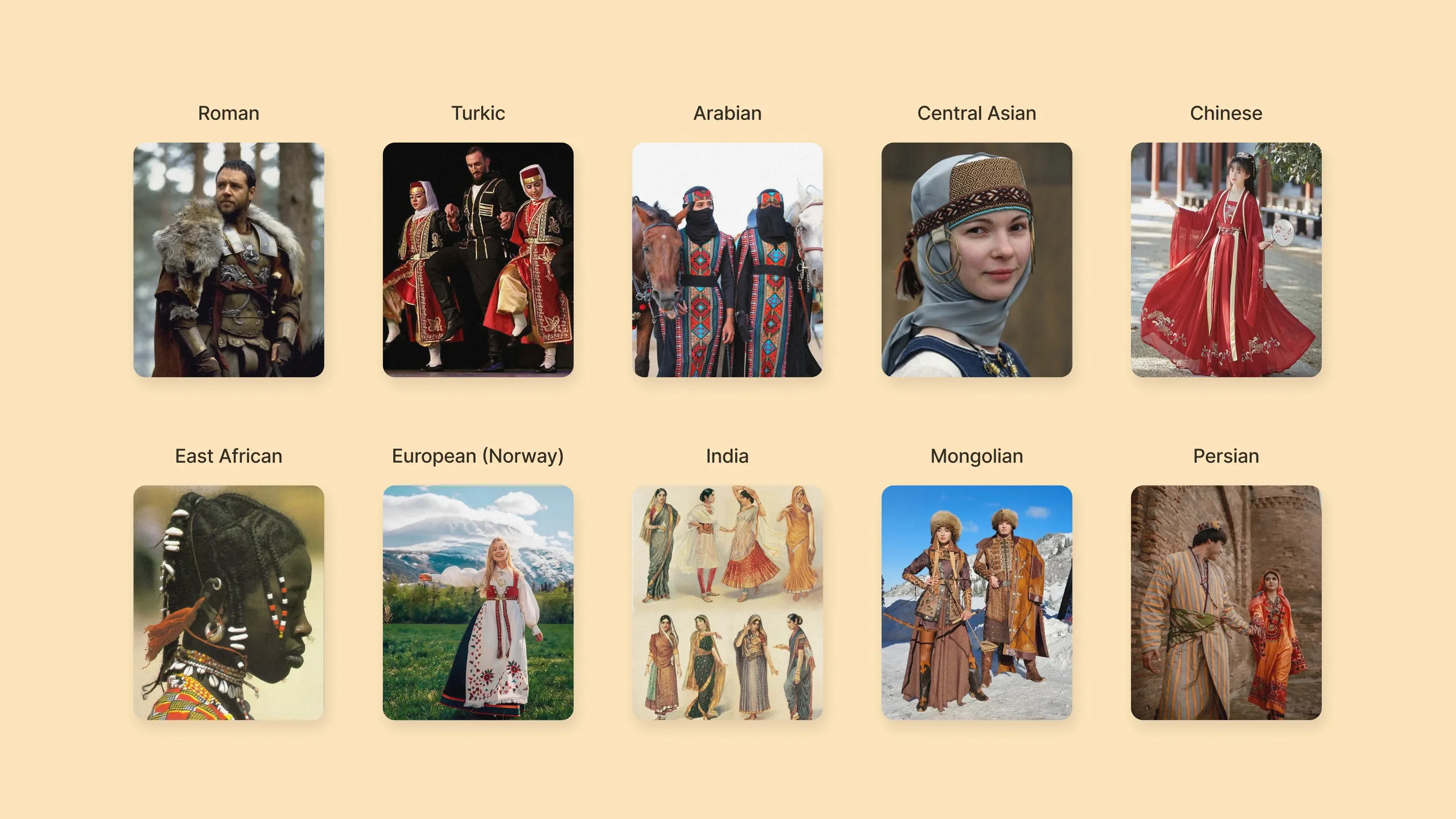
I researched the ten key cultures of the Silk Road (Roman, Turkic, Arabian, Central Asian, Chinese, East African, European, Indian, Mongolian, and Persian) across food, traditions, technology, music, and art, with extra attention to Chinese culture, since China hosts the event.
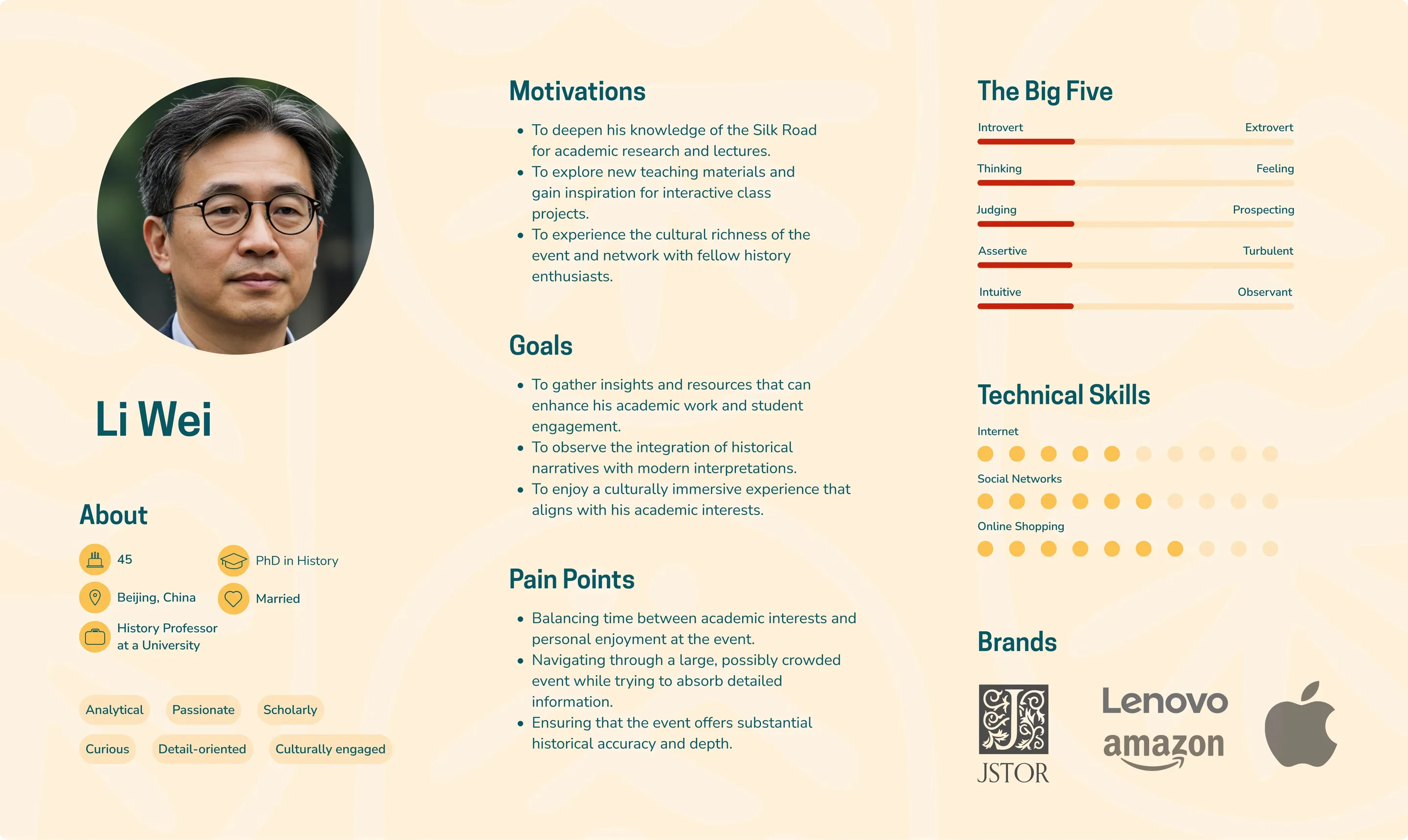
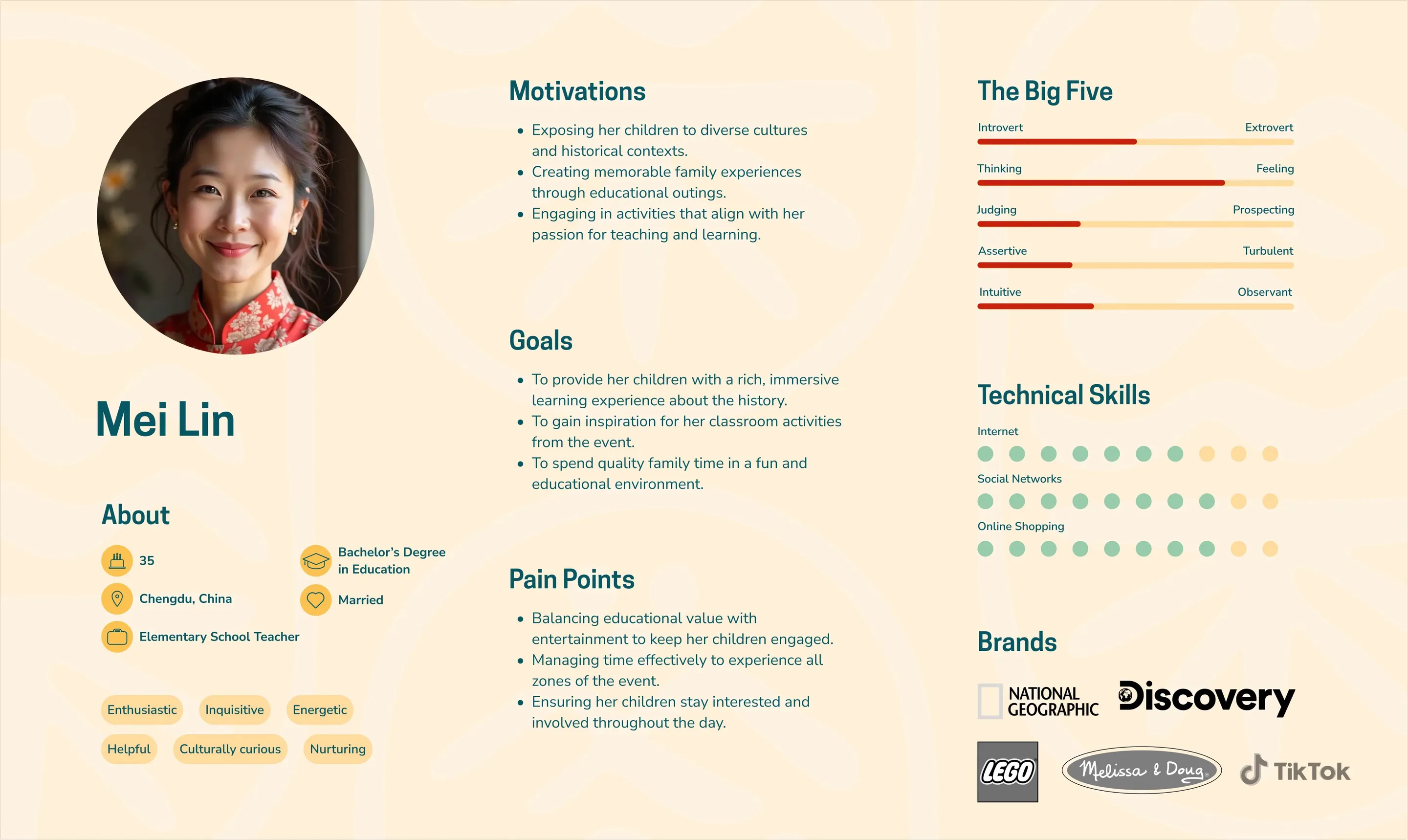
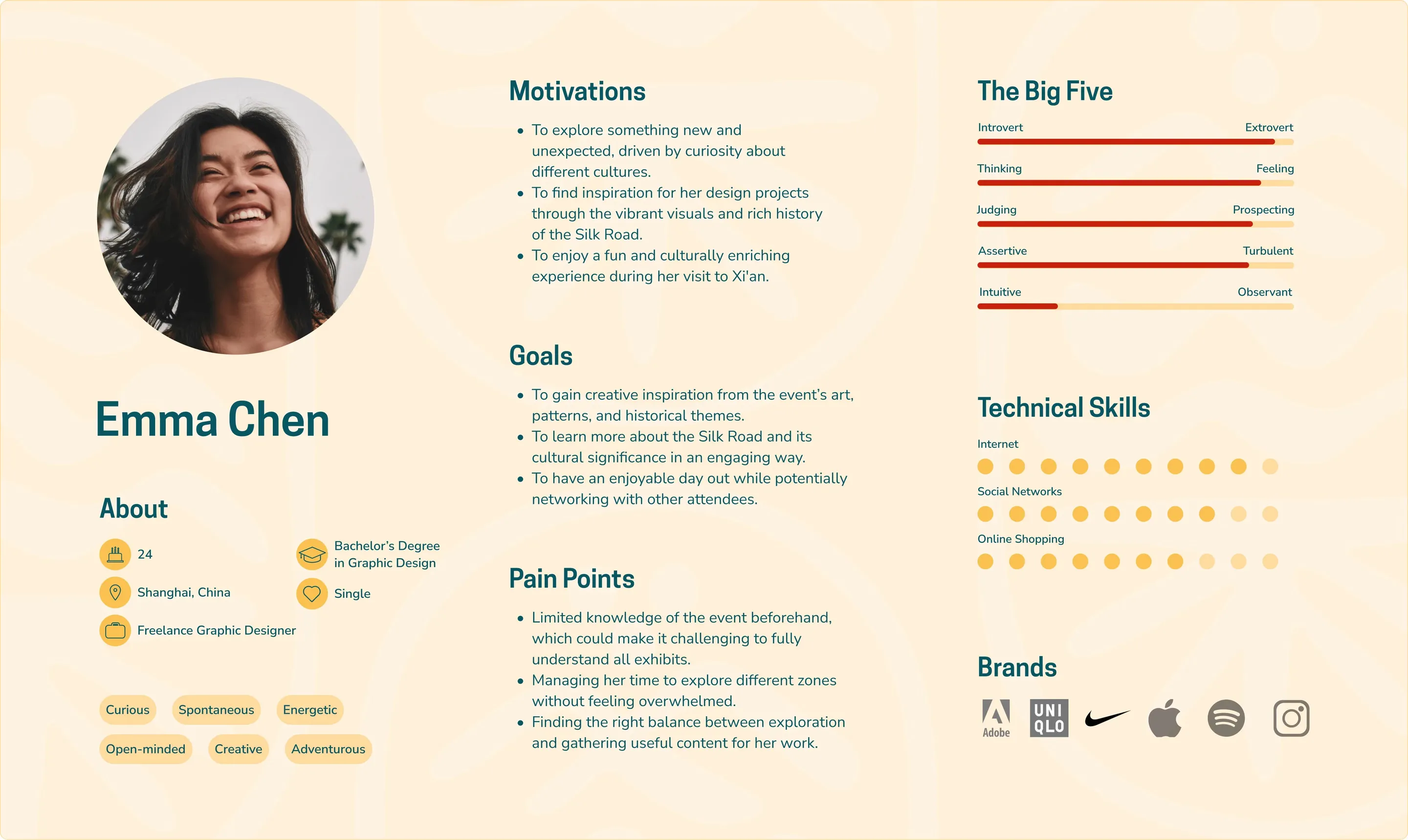
Three personas cover the audience: Li Wei, a history professor who wants depth and accuracy; Mei Lin, a teacher looking for a day that educates and entertains her children; and Emma Chen, a young graphic designer hunting for creative inspiration. The English and Chinese naming and signage serve international visitors too.
Concept & Layout
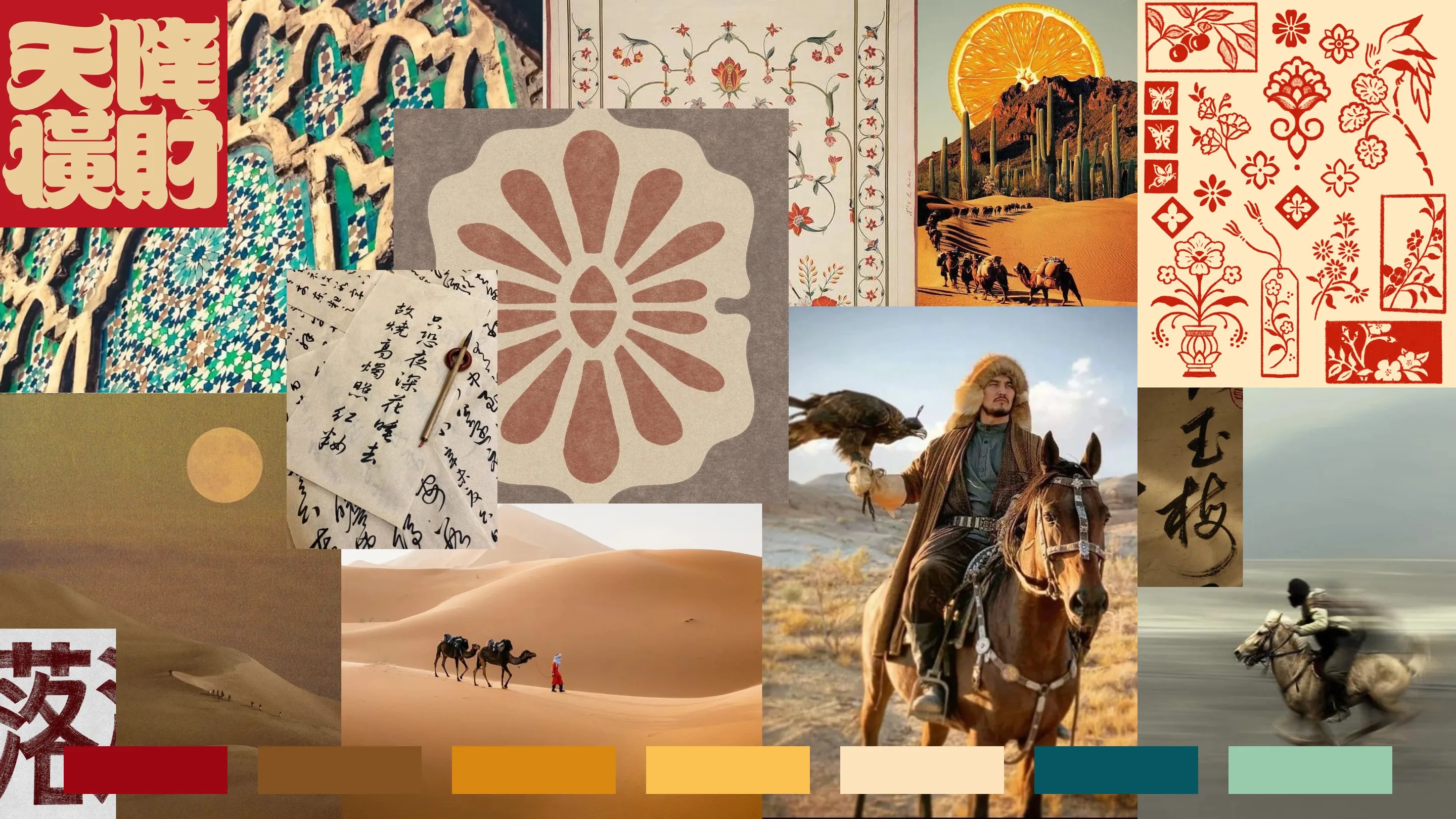
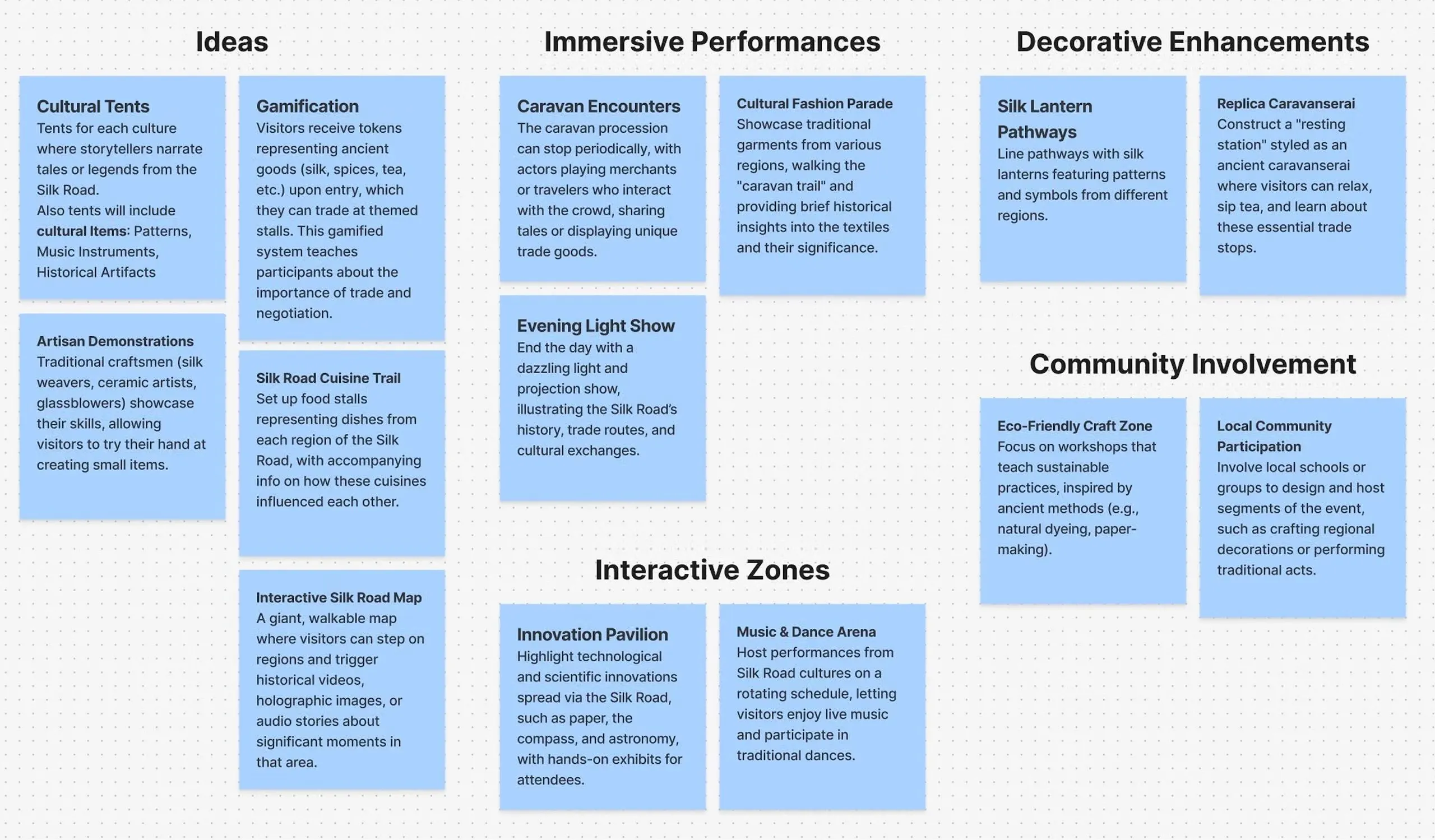
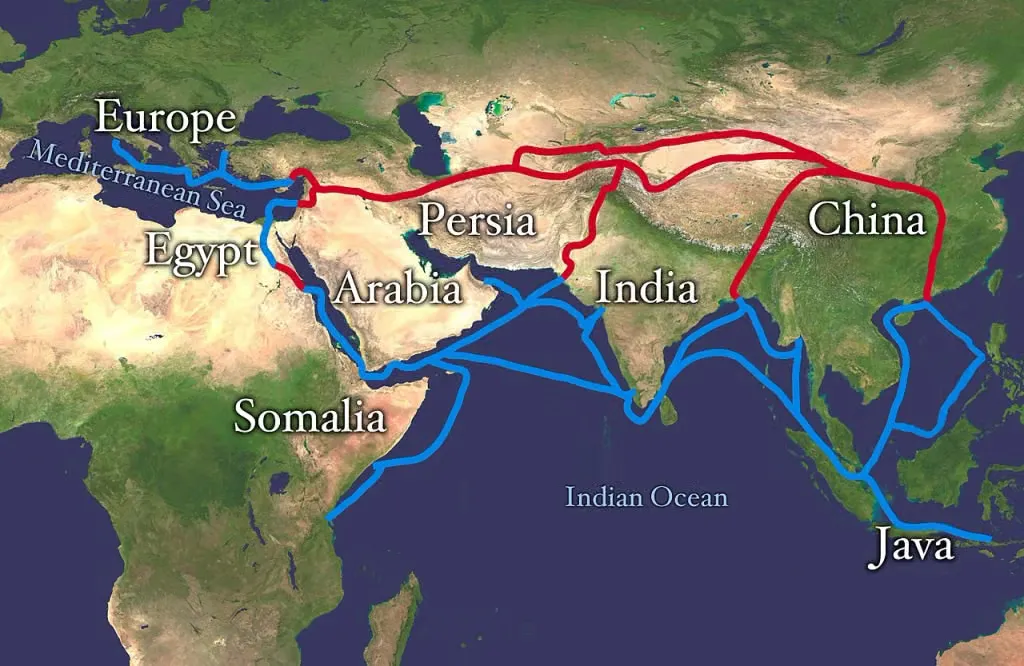
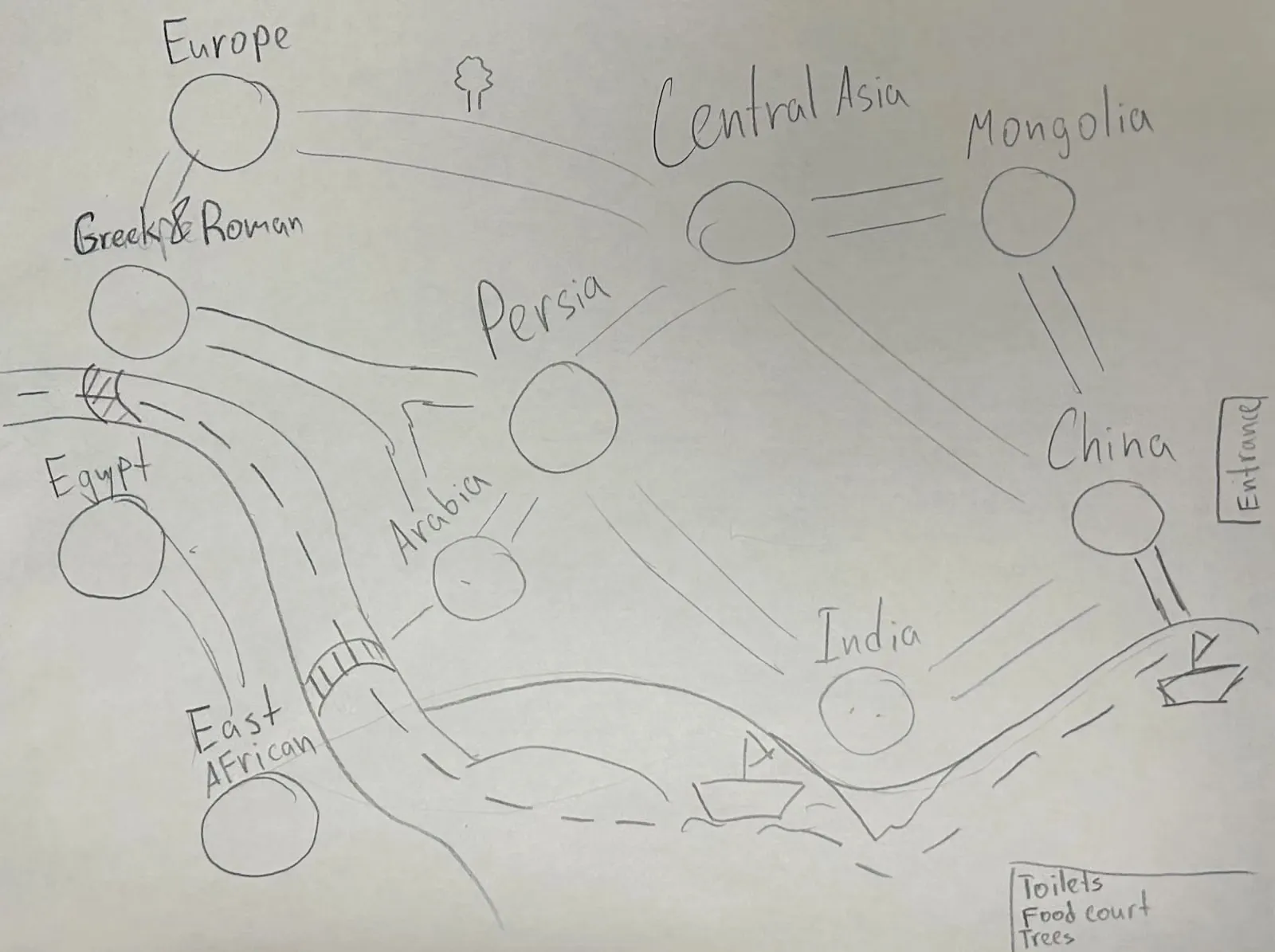
A moodboard and a study of each culture’s visual style set the tone. Brainstorming produced the main attractions: a caravan procession, cultural tents, and an evening light show. In sketches, we laid out pathways, stages, and activity zones, with the park shaped like a world map that the Silk Road routes cross.
Identity
By Nick Abramov
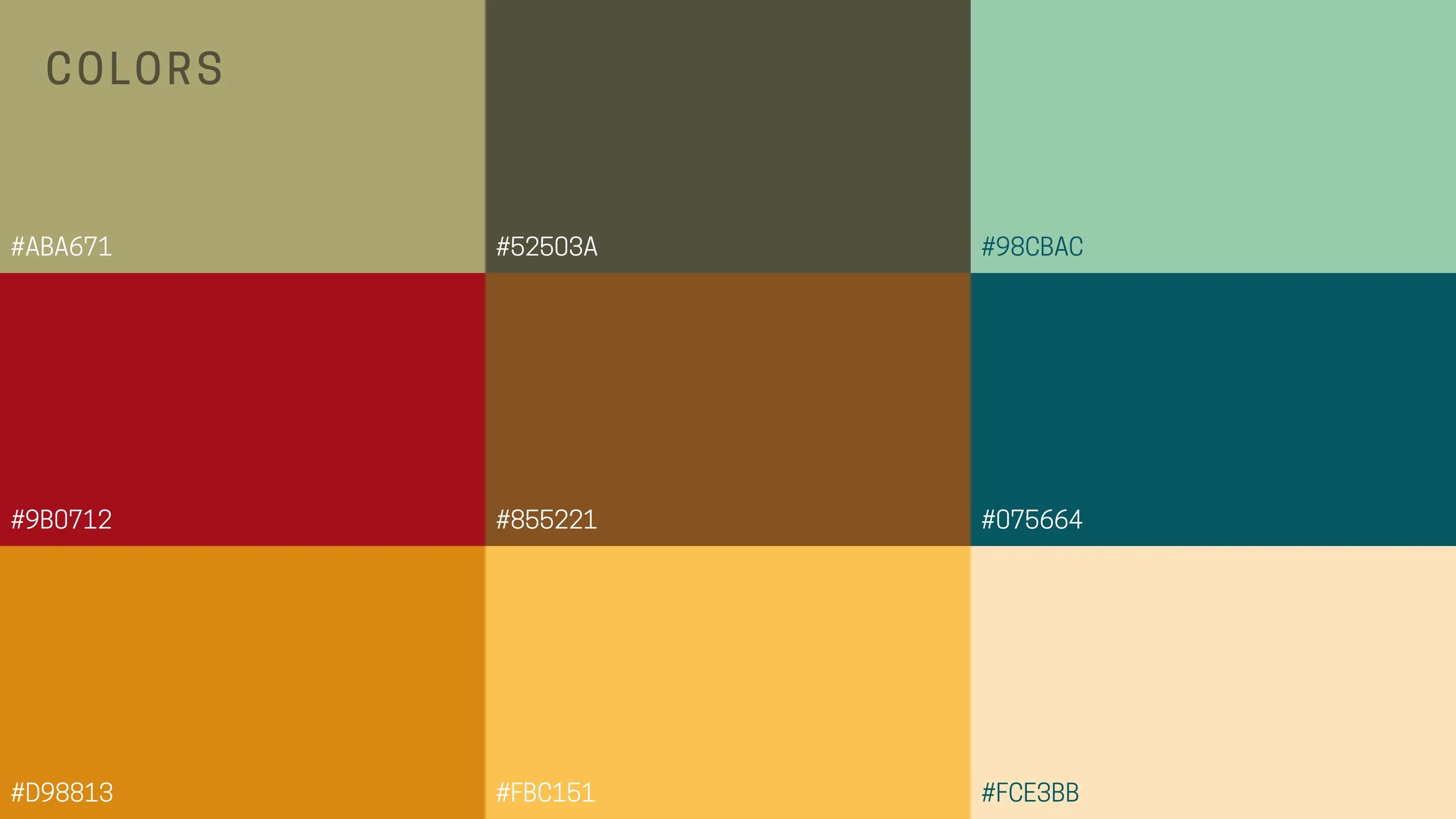
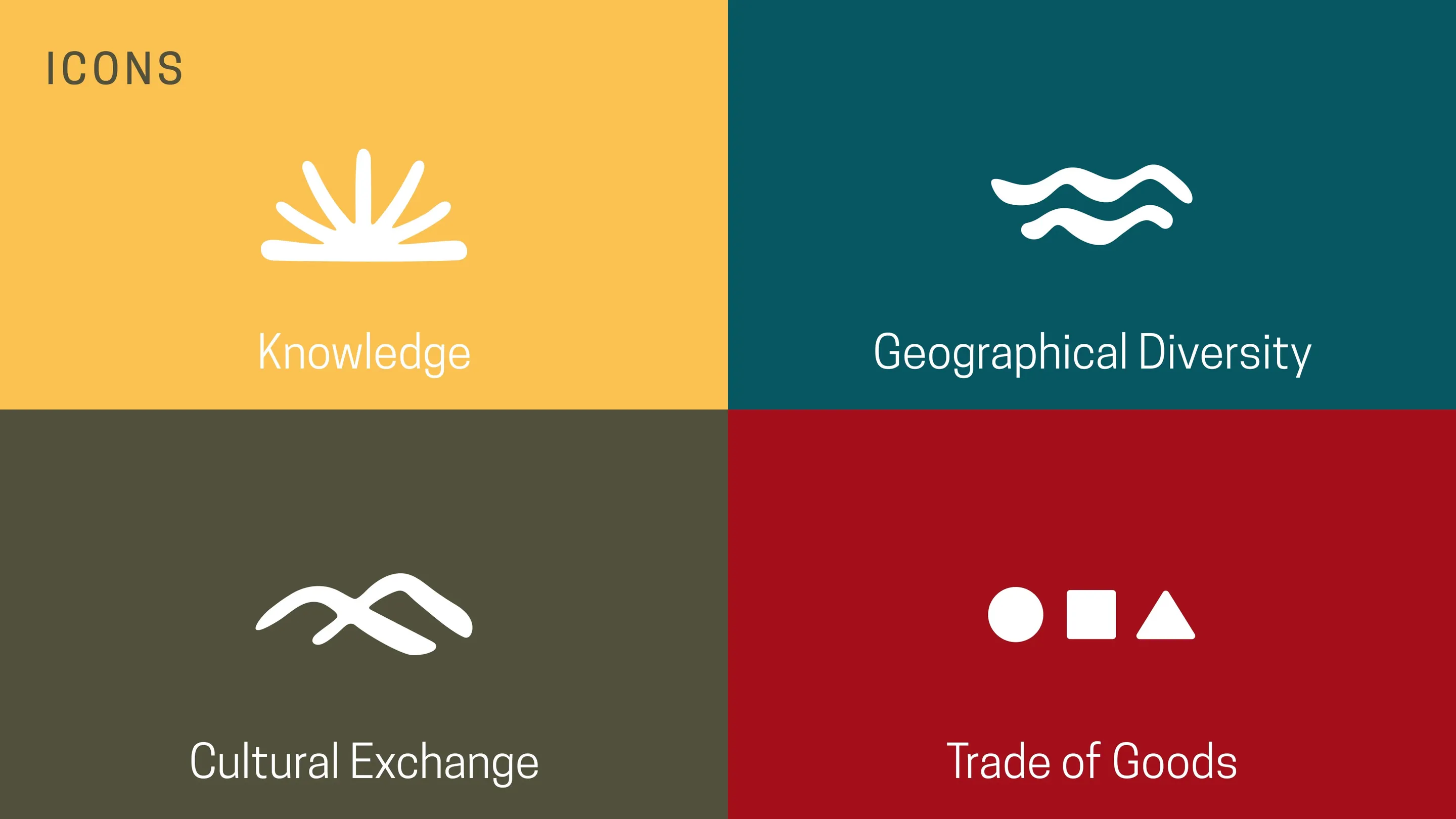
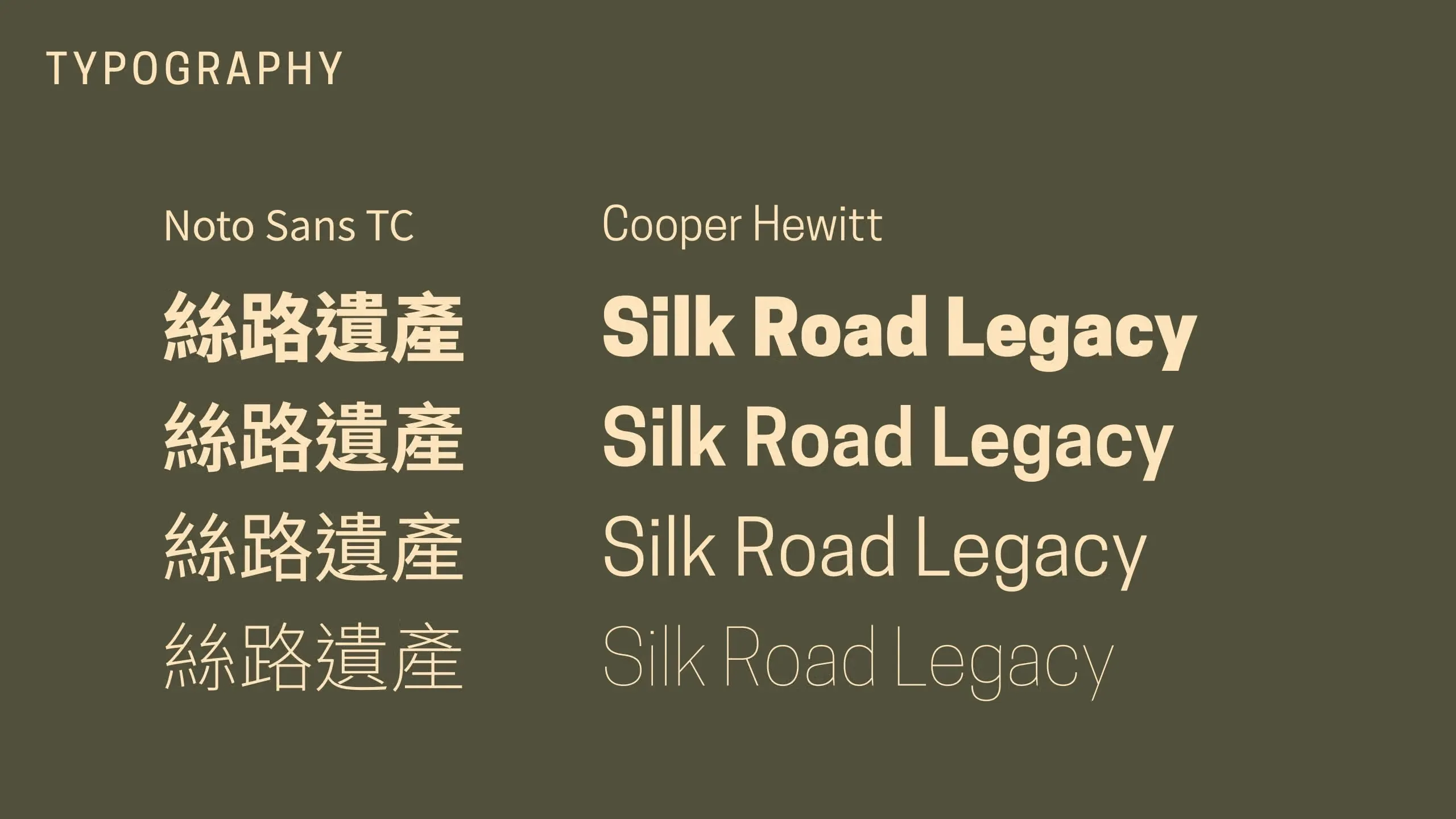
The logo is drawn like a traditional Chinese seal: an oval of Silk Road landscapes standing for knowledge, cultural exchange, trade, and geographic diversity, with the name in English and Chinese. Its parts also work on their own as icons. The palette mixes earthy olive, ancient reds, trade golds, and silk-and-water blues. The type is Noto Sans TC for Chinese and Cooper Hewitt for English.
The Experience
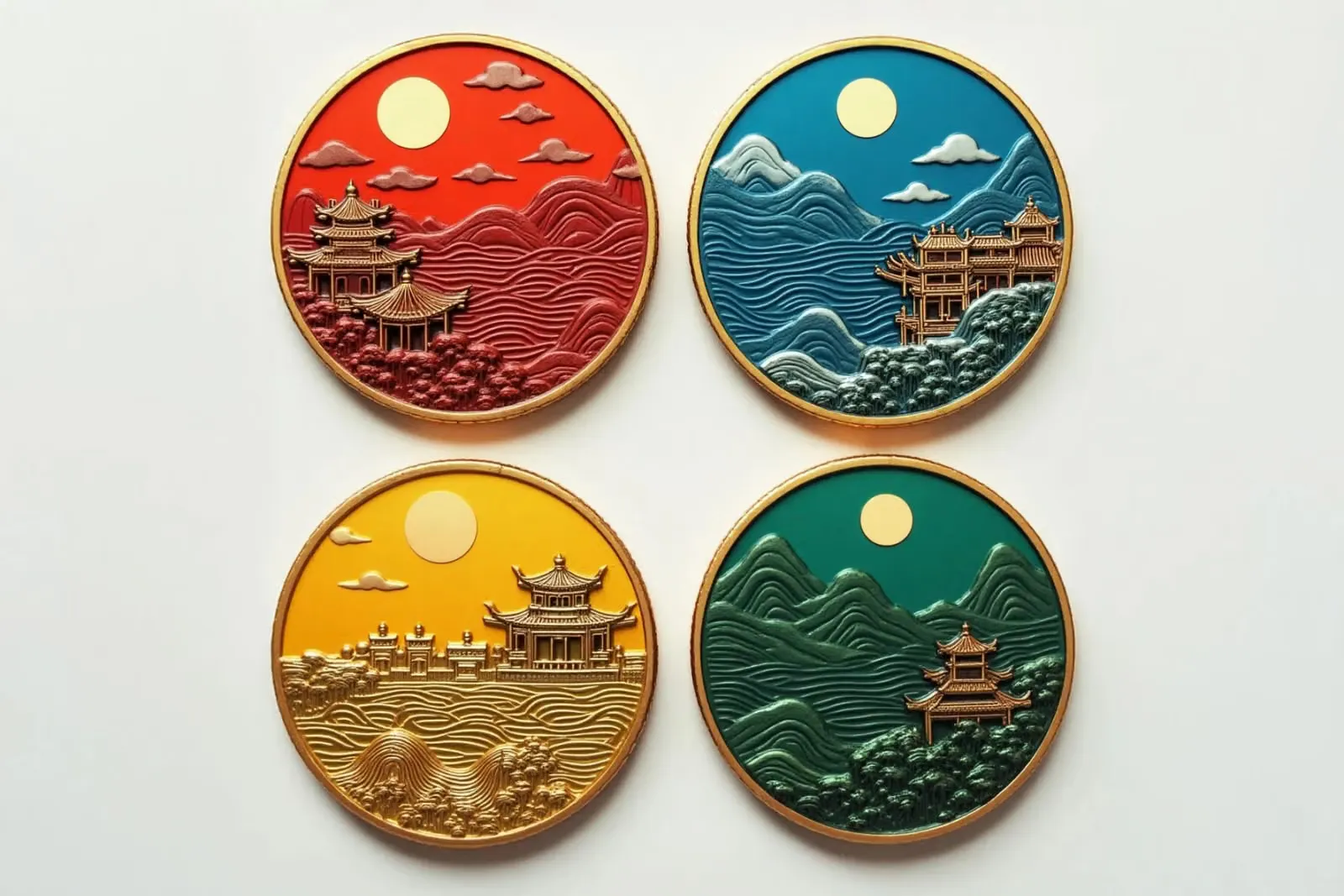
Coin trading. Every visitor gets coins at the entrance and wins more in games and lotteries, then trades them like a Silk Road merchant: red for food, blue for a boat ride along the “sea routes,” yellow for a souvenir from one of the cultures, green for a horse ride.
Caravan Procession
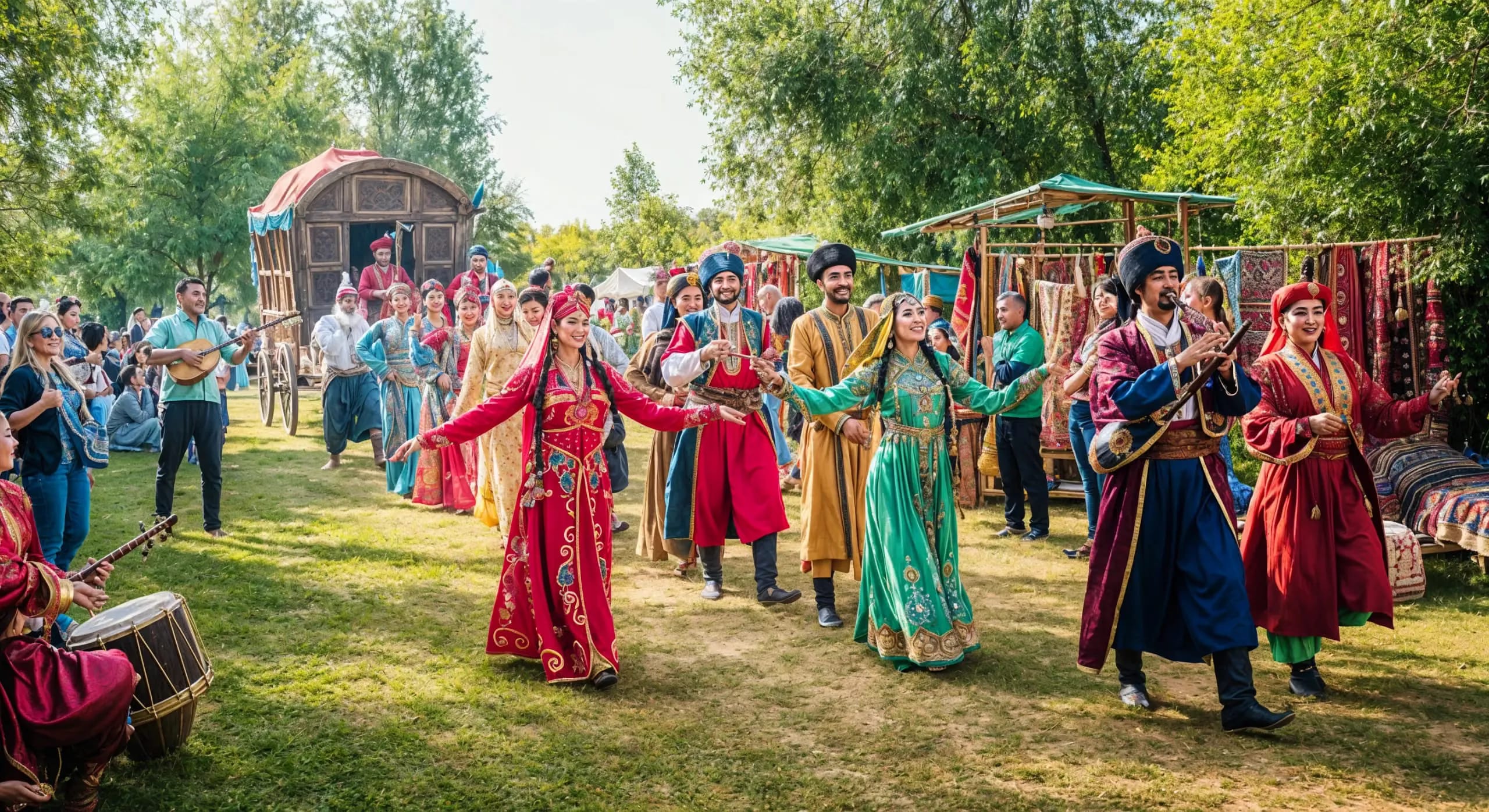
Every day, performers parade through the park as traders, musicians, and dancers, and visitors can walk alongside them.
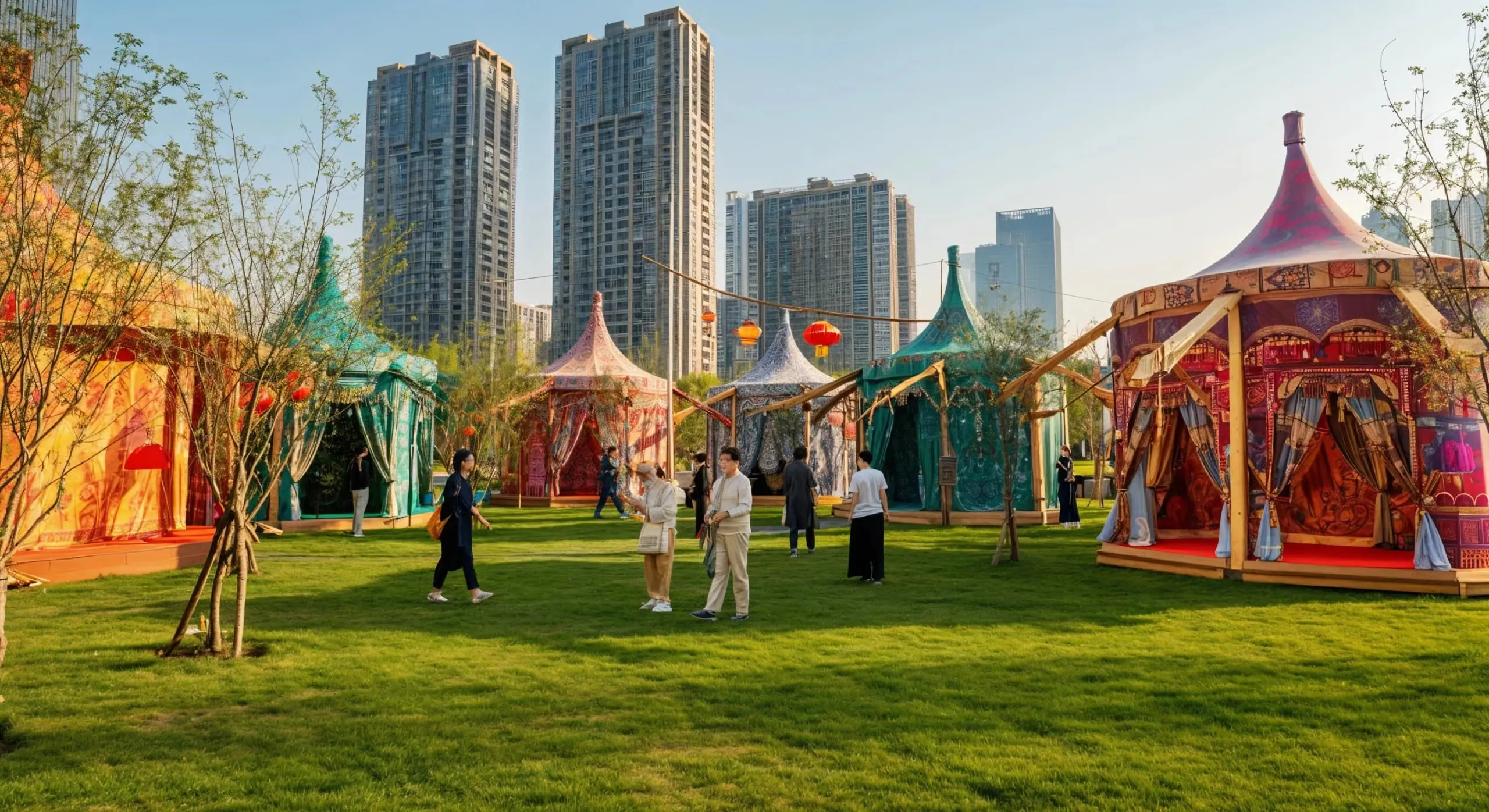
Cultural Tents
A tent for each culture, with artisans at work, traditional dishes, music, and dance.
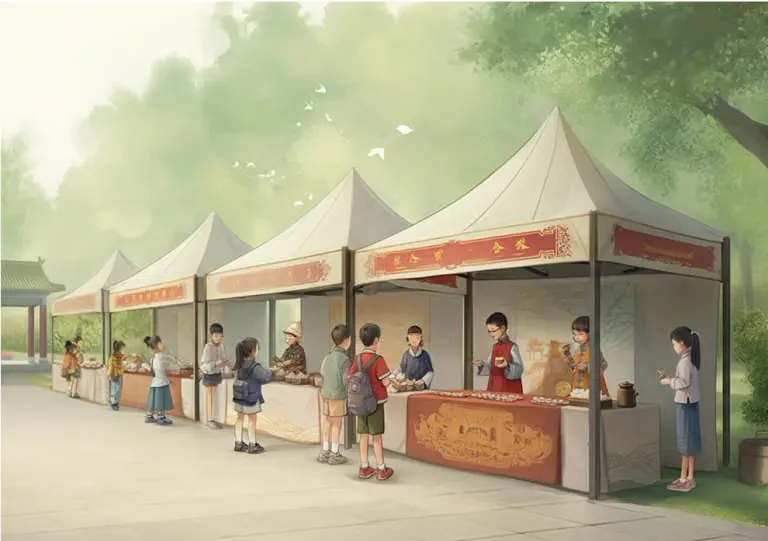
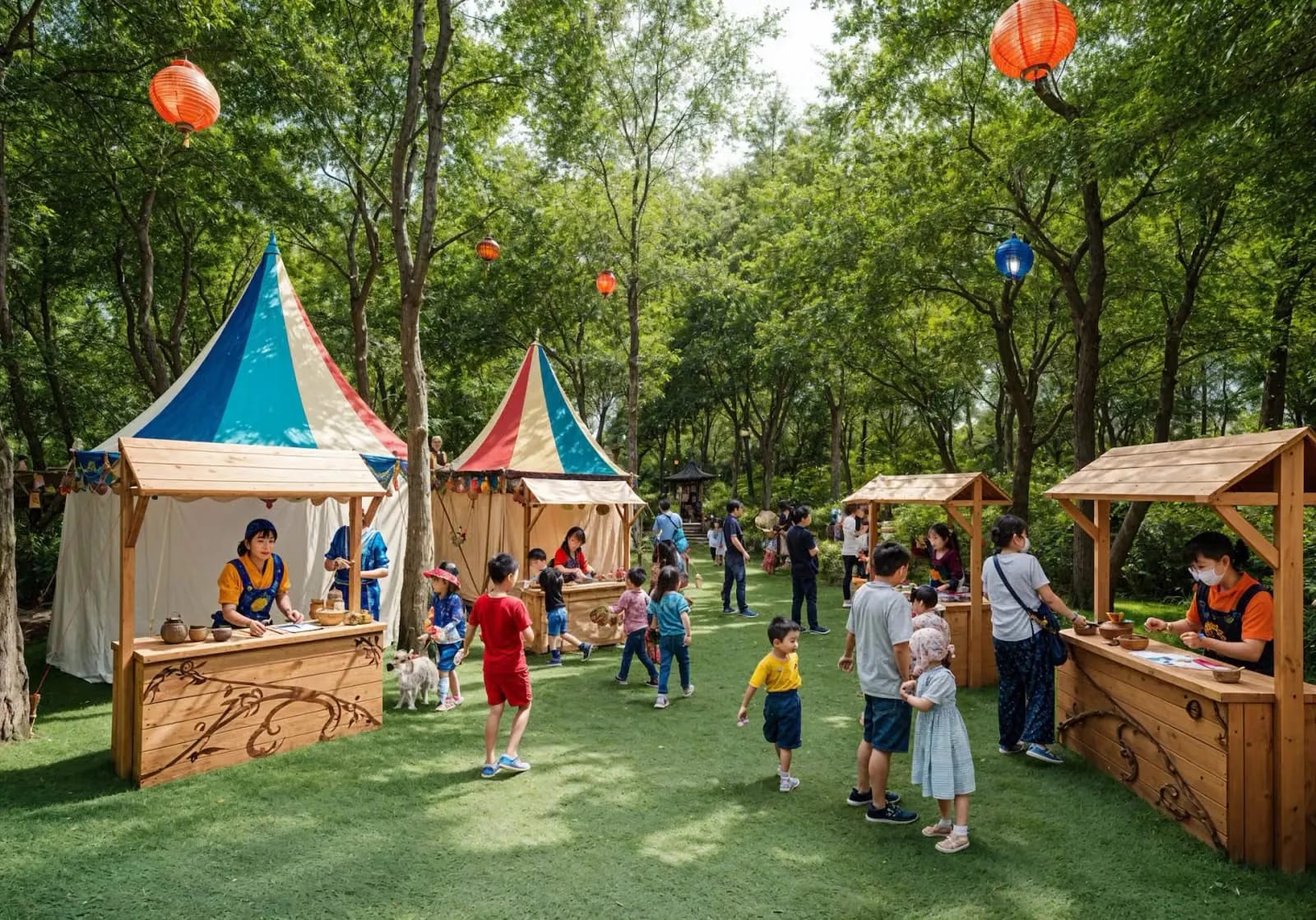
Kids Zone
Storytelling, craft workshops, and trading games that teach children how the Silk Road worked.
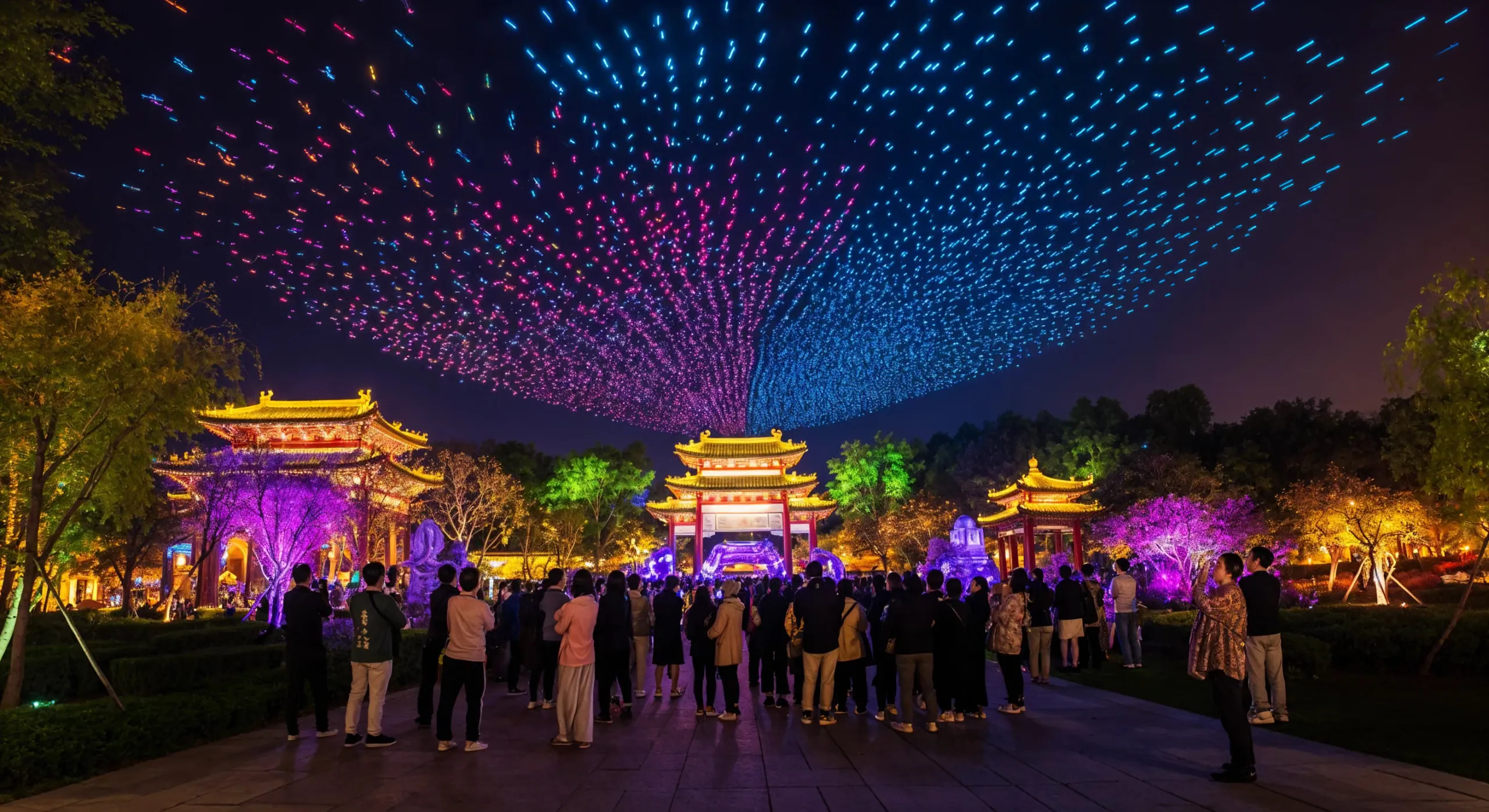
Drone Light Show
Each day ends with drones drawing the trade routes and their stories in the sky over the park.
Wayfinding & Event Map
My Part
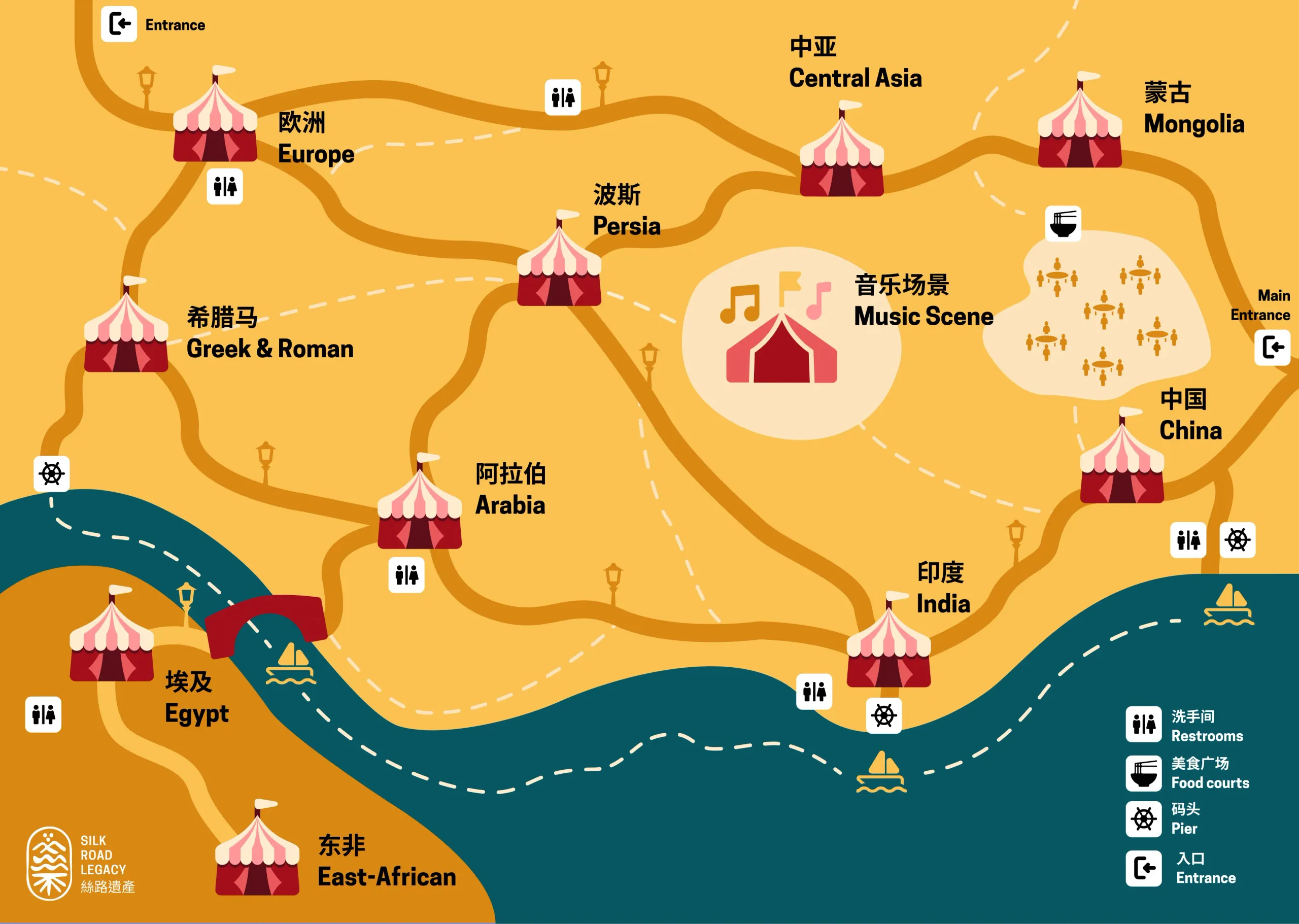
I designed the signage and the event map. The signs borrow traditional Silk Road motifs but stay clear and modern, so they guide people and add to the atmosphere at once. The map shows the historic routes together with what visitors actually need: boat routes, food courts, and restrooms, each with its own color-coded icon.
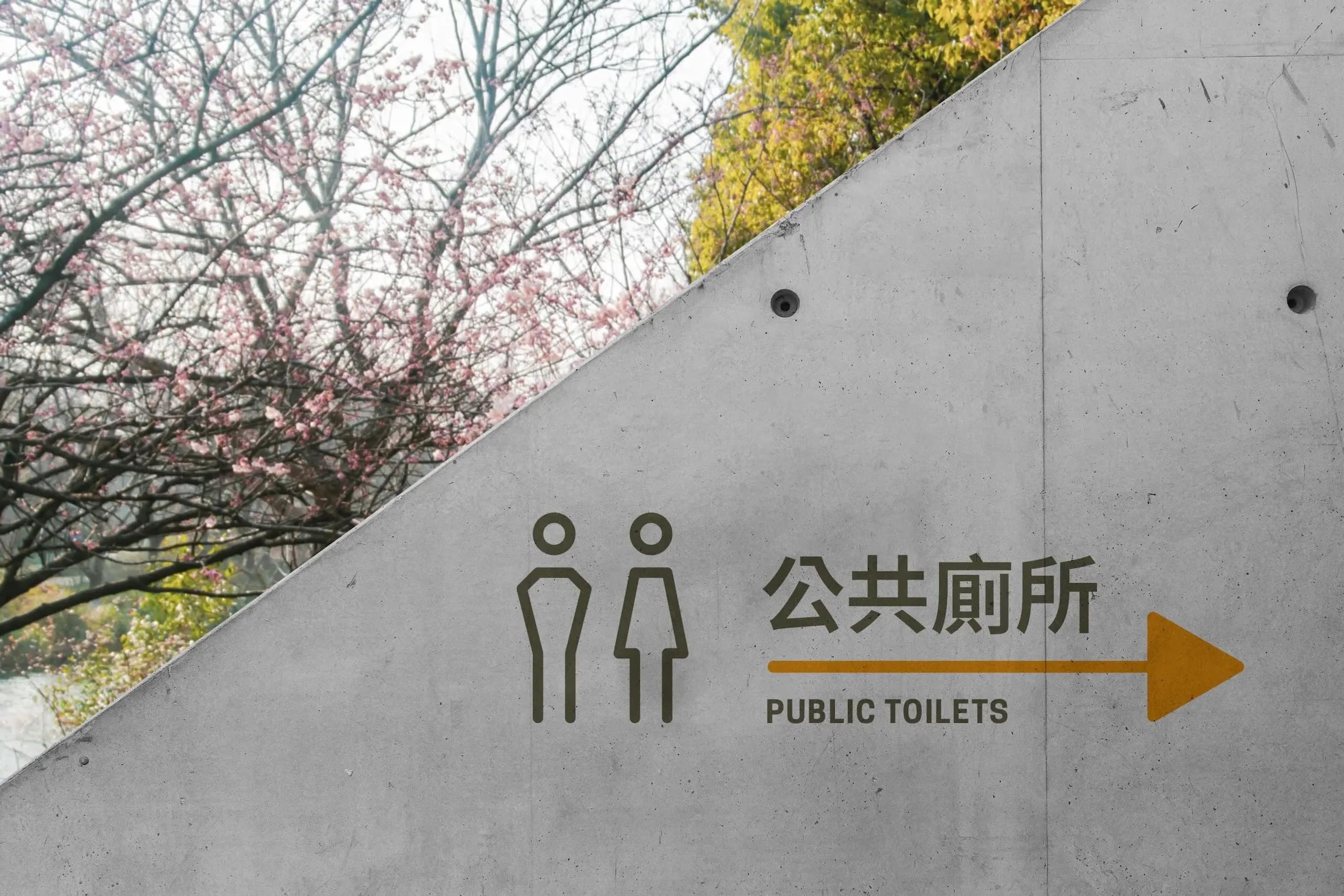
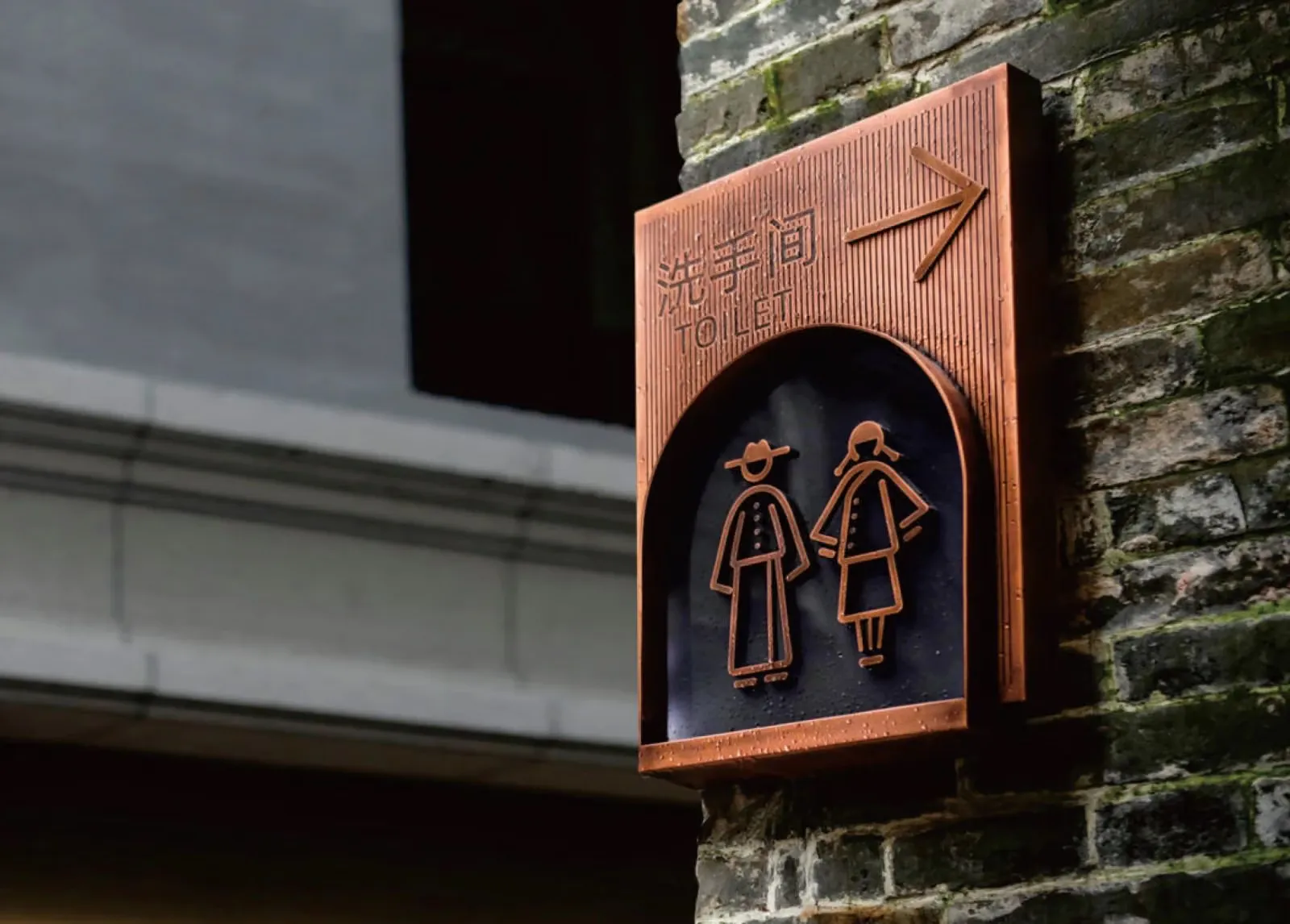
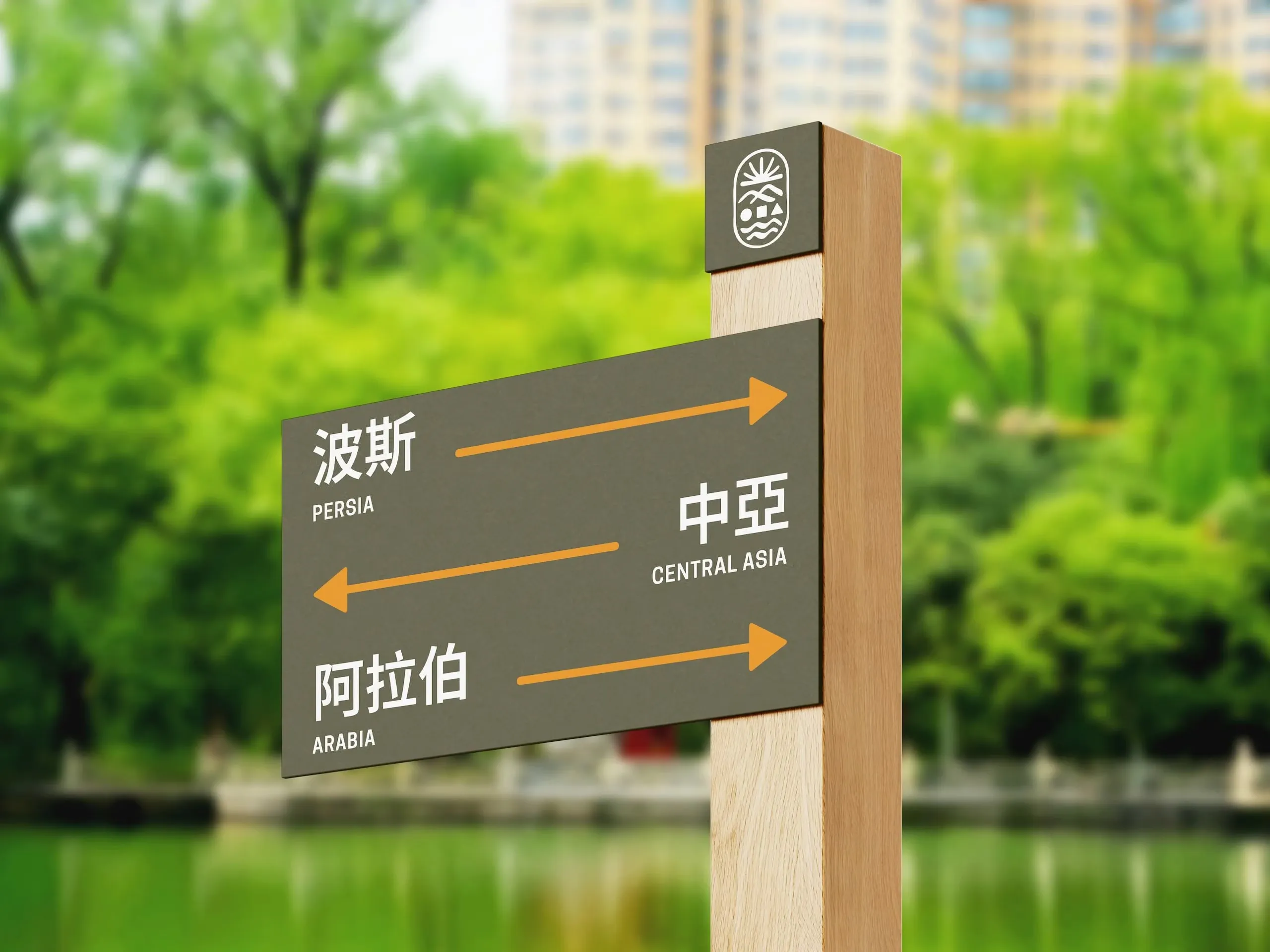
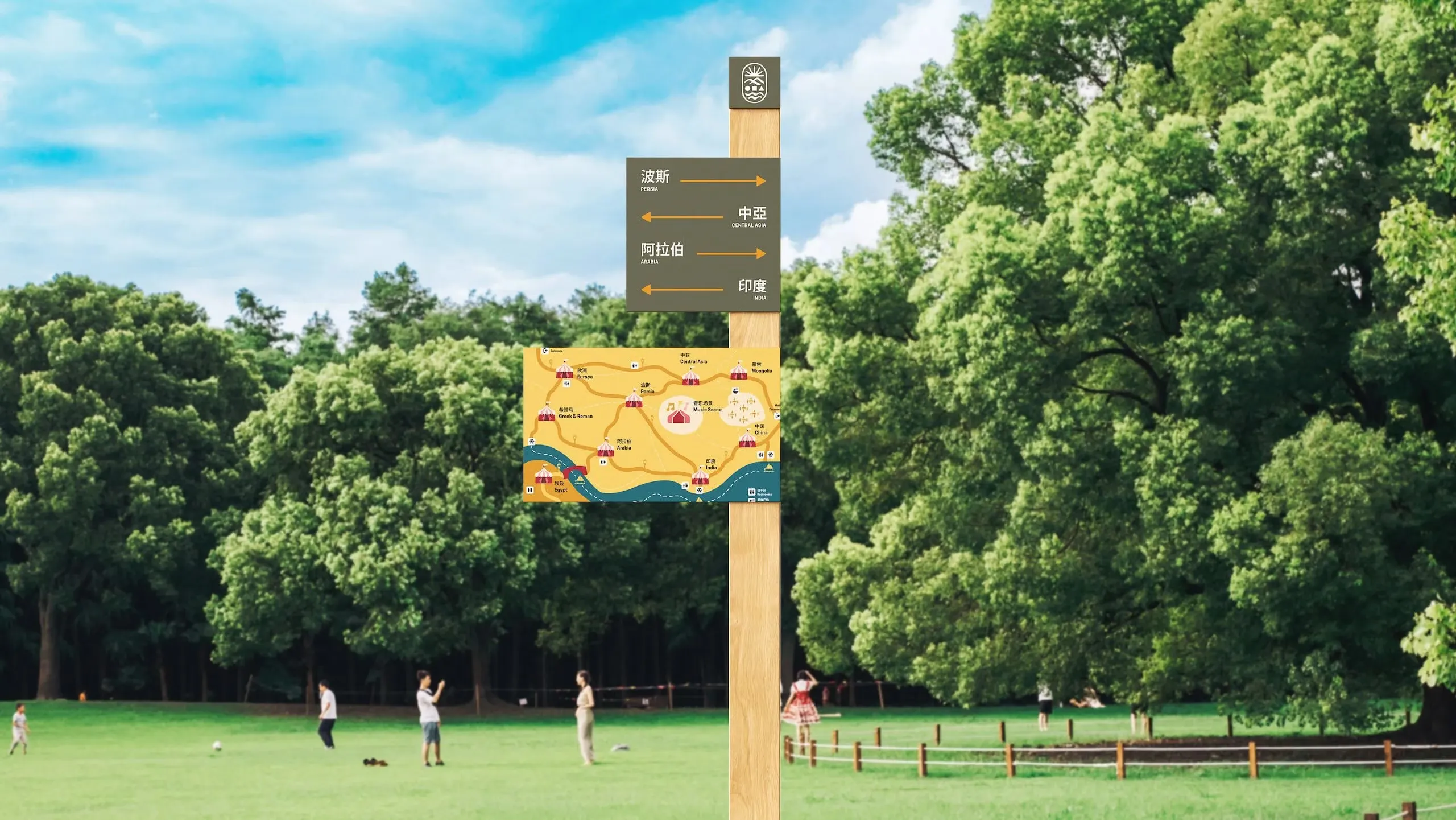
Visualizations
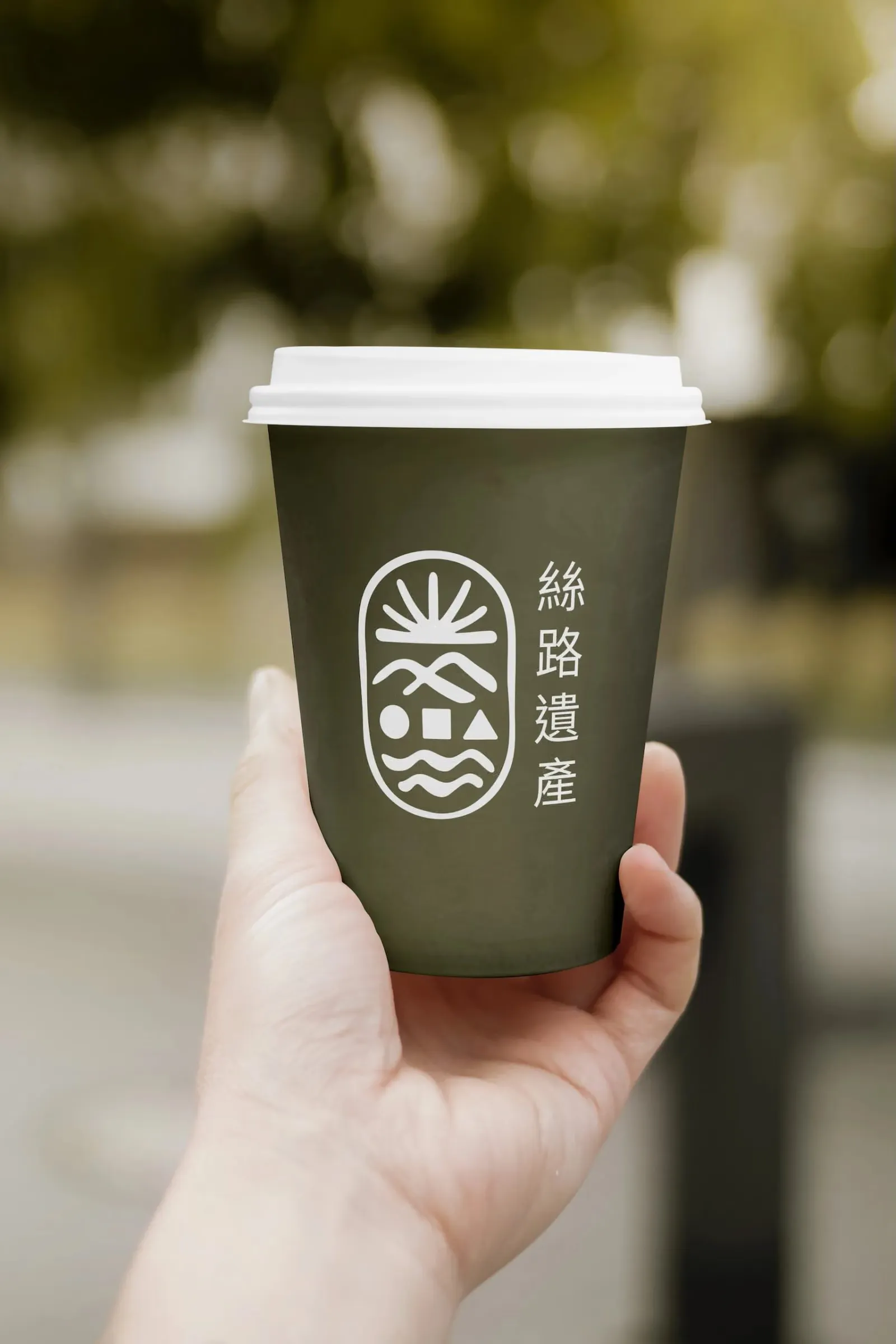
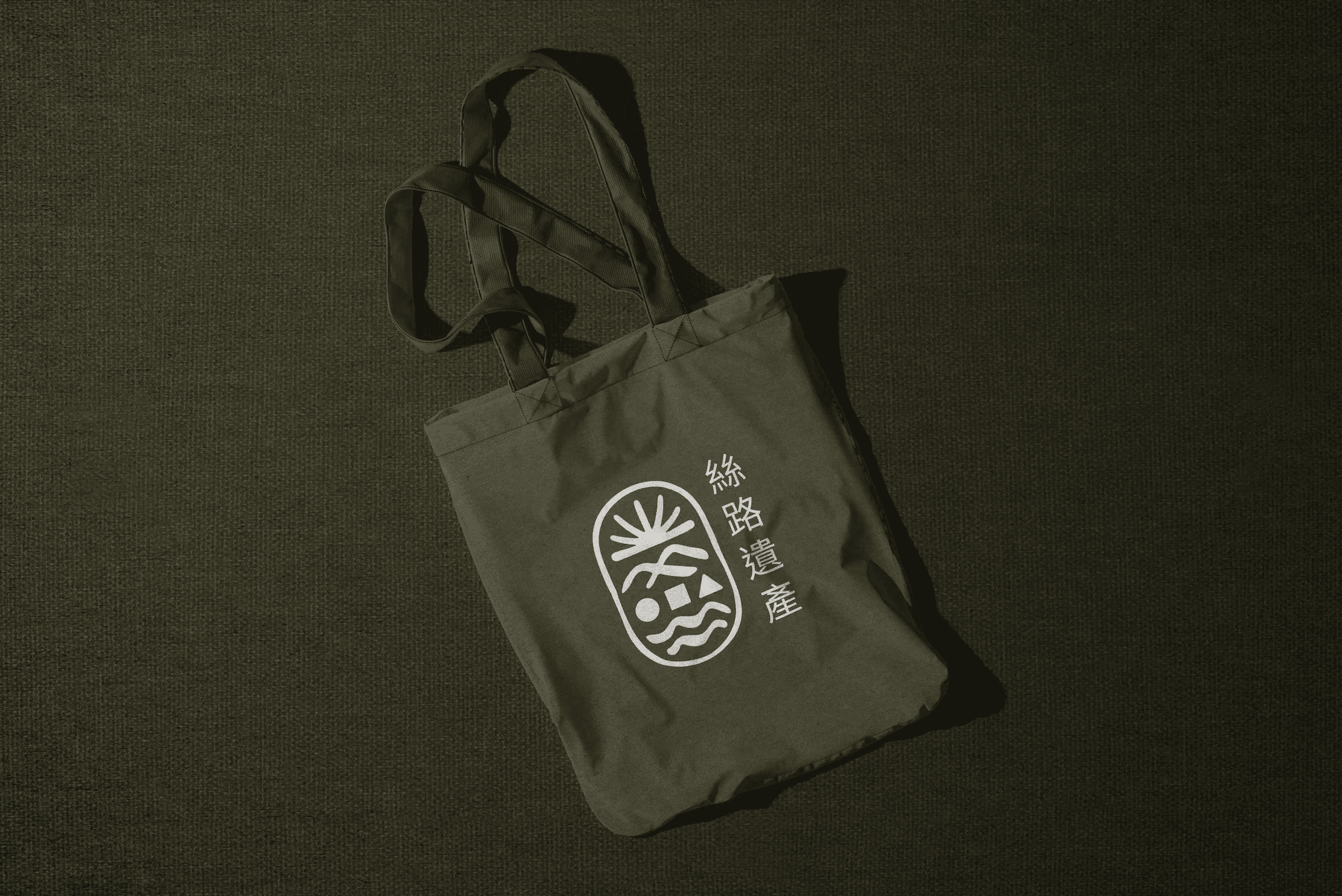
To show how it would all come together, we combined mockups with AI-generated scenes.
What I Learned
Designing for another culture means respecting it in the details. Our research showed that many people in China work long hours, so we stretched the festival to nine days to fit busy schedules.
Working in a pair improved my communication, my sense of responsibility for my own parts, and my critical thinking.
This project was created as part of the Experience Design course at Montreat College in spring 2025.